
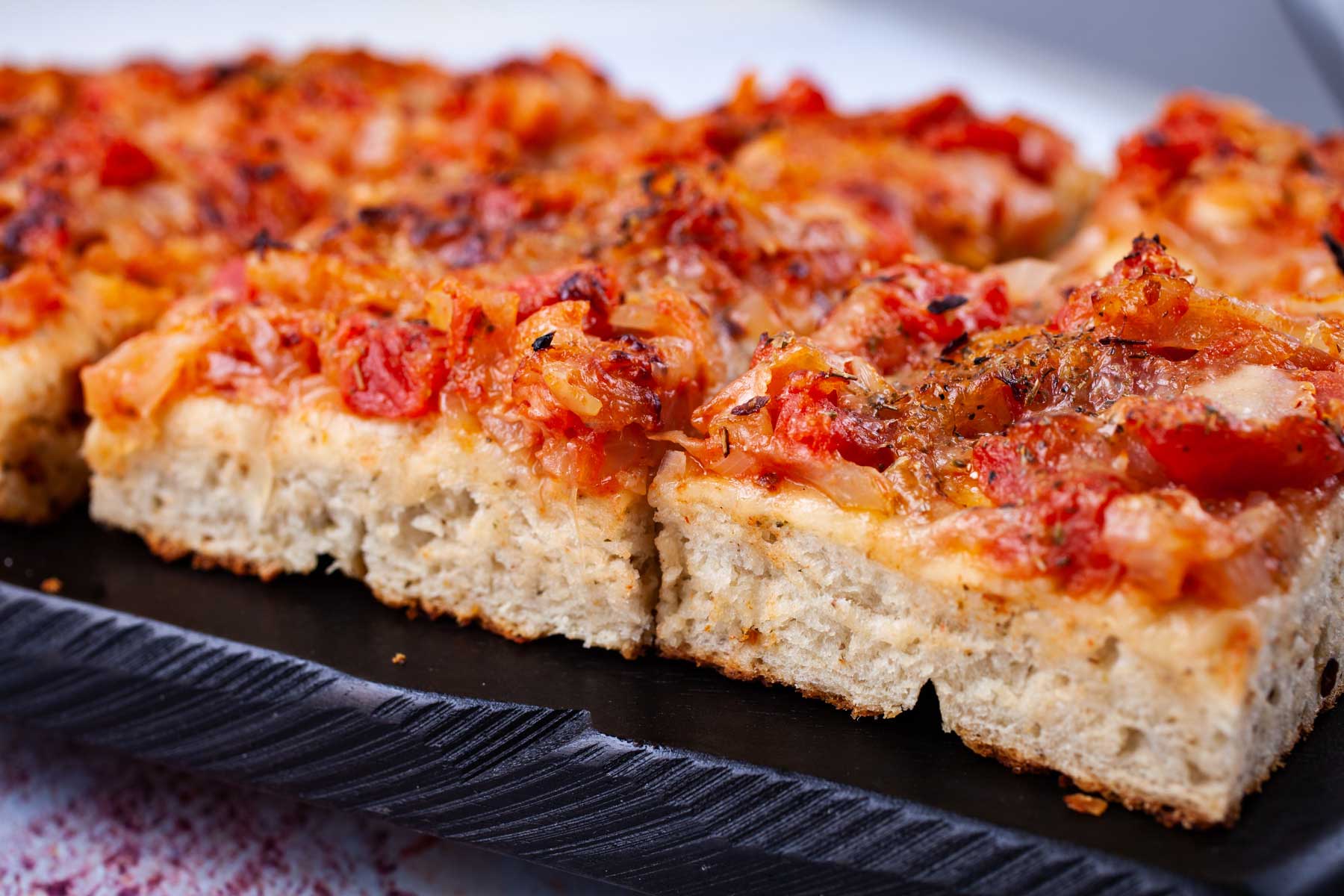
Thick-crust Sicilian pizza is a hearty, satisfying sheet-pan pizza with a soft, airy interior and a beautifully crispy bottom, topped with a rich tomato-and-sweet-onion sauce seasoned with oregano and red pepper flakes. Made entirely by hand with no stand mixer needed, it feeds a crowd and is something my grandmother made for special Sundays.
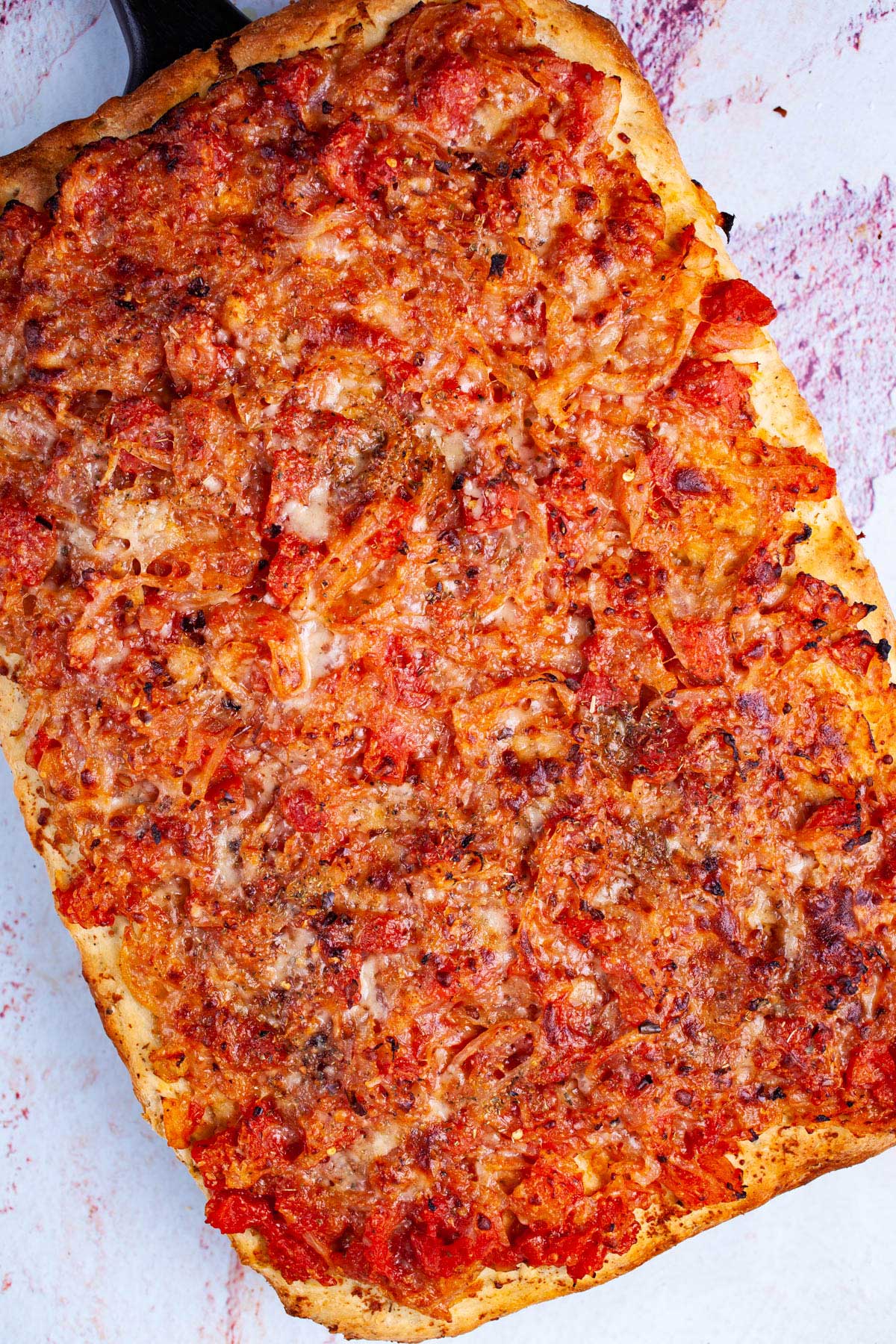
My grandmother would make this Sicilian pizza once or twice a year. It was a specialty food when I grew up, and I want to share it on the blog because it is part of my childhood and the perfect pizza to enjoy with family and friends.
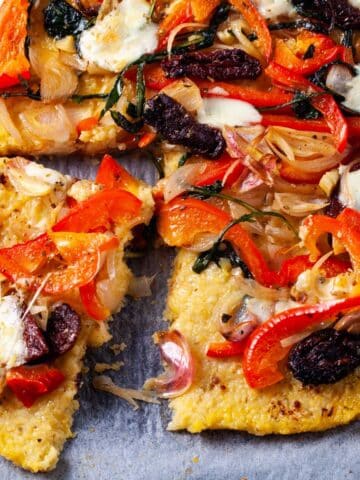
Homemade comfort foods can easily fit into a healthy lifestyle as long as they are enjoyed in moderation — and this Sicilian pizza is pure homemade goodness. If you want a gluten-free pizza option, try my cornmeal polenta pizza crust instead. Let's make it!
Why You'll Love This Recipe
- Authentic and family-tested: This is my grandmother's recipe, made by hand the traditional way — no stand mixer, no shortcuts, just a beautiful thick crust with real homemade flavor.
- Feeds a crowd: Baked on a large sheet pan and cut into squares, this pizza comfortably serves 12 and is ideal for family dinners, movie nights, or entertaining guests.
- Make-ahead friendly: The dough can be made ahead, and the baked pizza freezes well for up to two months, making it a great recipe to have in your back pocket.
- No special equipment needed: All you need is a large rimmed baking sheet and your hands. No pizza stone, no stand mixer, no rolling pin.
- Completely customizable: The base recipe is traditionally meatless, but the dough takes beautifully to any toppings you love.
Ingredients & Notes: The Dough
For a proper homemade Sicilian pizza dough, you only need a handful of basic ingredients.
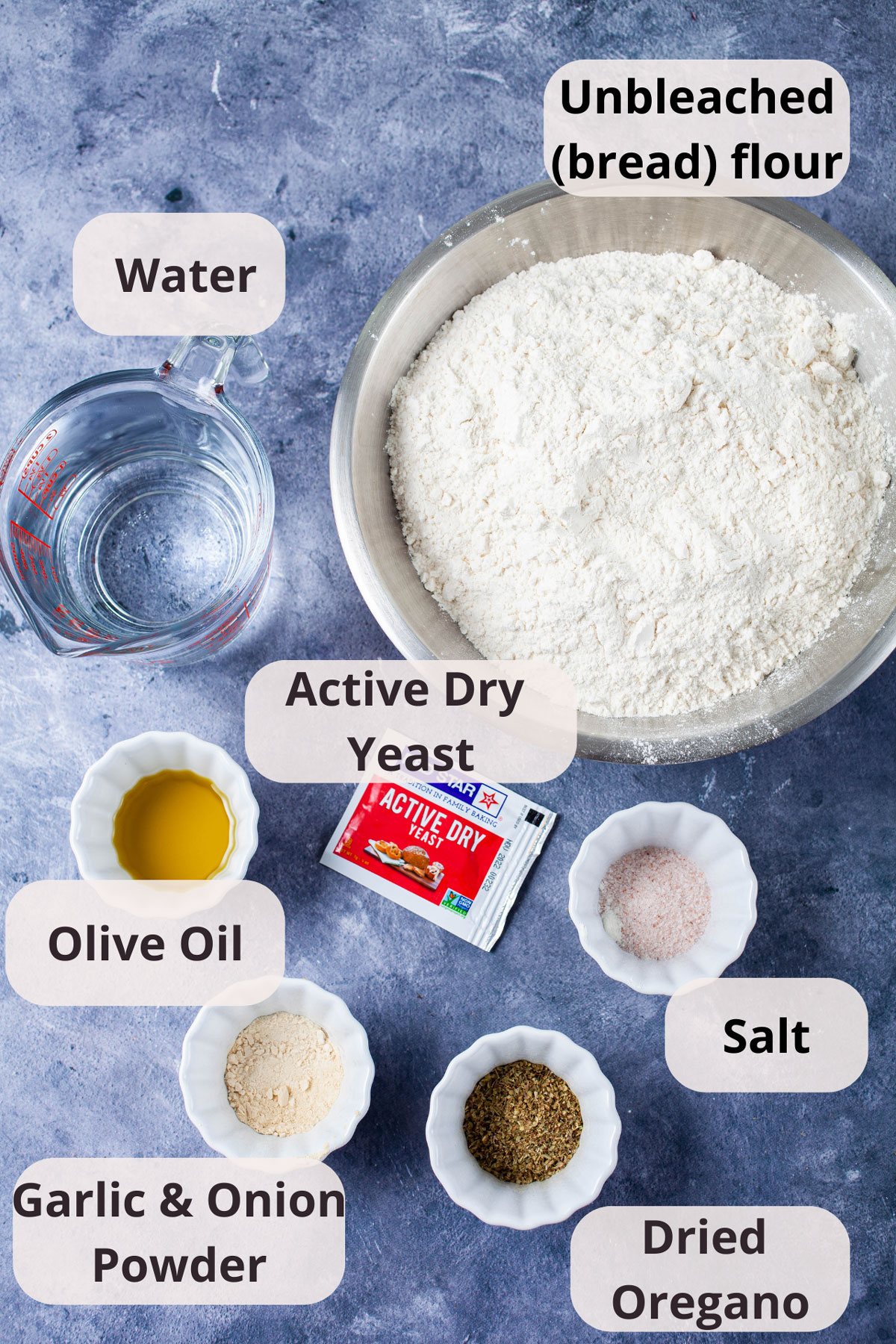
- Flour: Use 7½ cups (1 kilo) of unbleached bread or all-purpose flour. Bread flour gives a slightly chewier crust; all-purpose works just as well for a softer result.
- Water: About 2¼ cups (560 ml) at room temperature. Always have a little extra on hand — the exact amount depends on your flour and humidity. It hydrates the flour and activates the yeast.
- Active dry yeast: One 7 to 9-gram packet. This is what makes the dough rise and gives the crust its airy, open texture. The original recipe calls for fresh yeast, but active dry yeast works just as well, has a longer shelf life, and is widely available. Any extra packages can be used to make my dried fig walnut cake or zeppole doughnuts.
- Olive oil: Just one tablespoon worked into the dough for a smooth, elastic finish and a subtle richness in the crust.
- Seasoning: Salt, garlic powder, onion powder, and dried oregano — these go directly into the dough and give every bite of the crust authentic Italian flavor. Salt also strengthens the gluten structure.
- Sugar: Just half a teaspoon, used to feed and activate the yeast.
Ingredients & Notes: The Pizza Sauce
The sauce is simple, deeply flavored, and traditionally meatless.
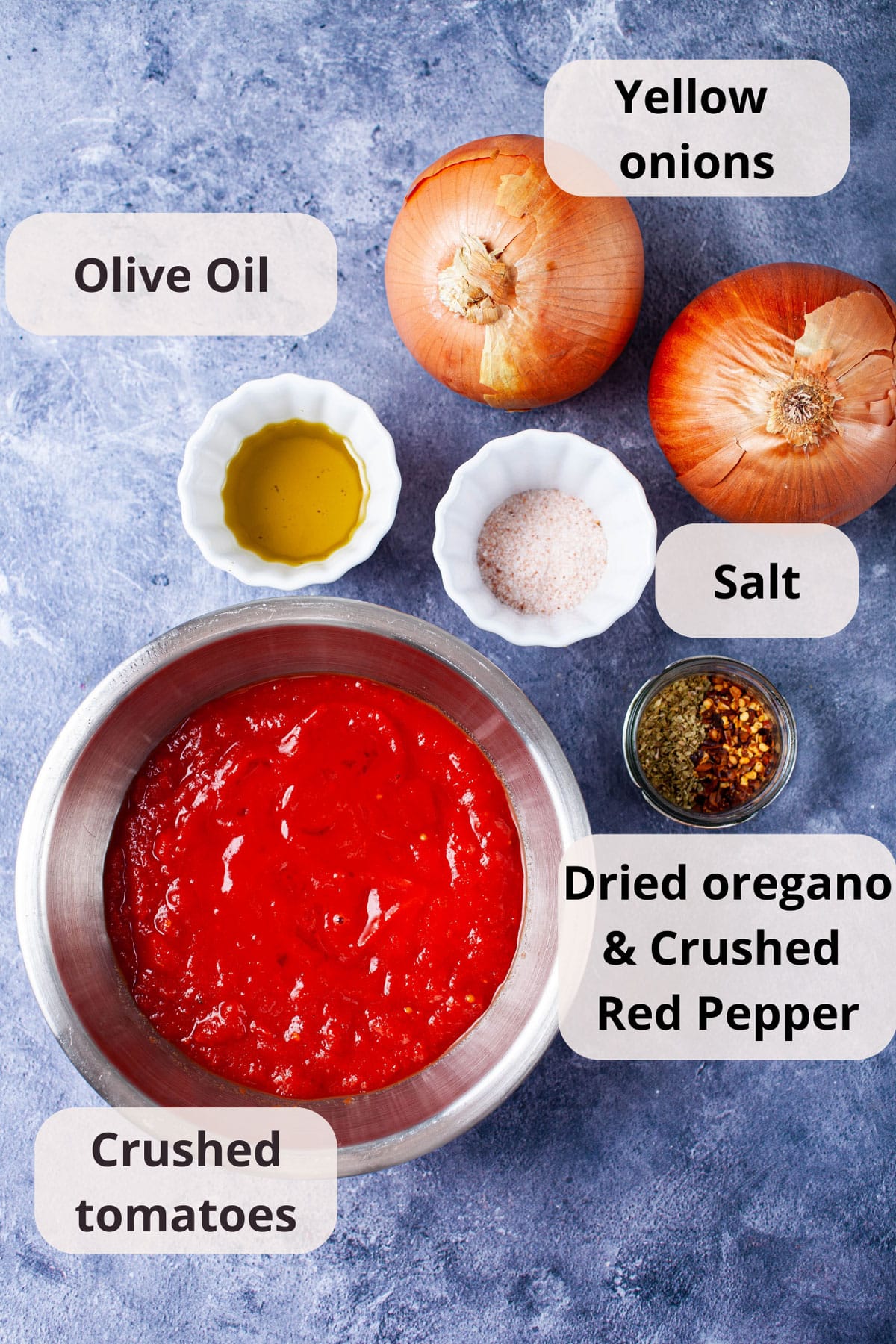
- Crushed tomatoes: Use good-quality crushed or diced tomatoes with no added salt or sugar. I love the Jovial brand — pure, sweet tomatoes straight from the jar. You can also use leftovers of my go-to homemade tomato sauce instead.
- Yellow onions: Two large onions, thinly sliced. Yellow onions become beautifully sweet once slightly browned and won't overpower the rest of the seasoning. They're the soul of this sauce.
- Olive oil: Use a quality oil you love. It adds tremendous flavor to both the sauce and the crust.
- Seasoning: Salt, dried oregano, and crushed red pepper flakes add Italian aromatic depth and a gentle heat that balances the sweetness of the onions.
- Parmesan cheese (optional): Half a cup of finely grated Parmesan sprinkled over the top before the final bake adds a nutty, salty finish. Pecorino or Caciocavallo work beautifully too.
Note: Traditionally, this is a meatless sauce made from tomatoes, lots of onions, and herbs. Anchovies are not part of the original, though if you love them, scatter a few fillets over the sauce before the final bake for a salty, savory depth. If you're going for a New York-style Sicilian pizza, add fresh mozzarella during the last 15 minutes of baking, or finish with grated Parmesan or Pecorino for a salty, nutty bite.
How to Rehydrate Active Dry Yeast
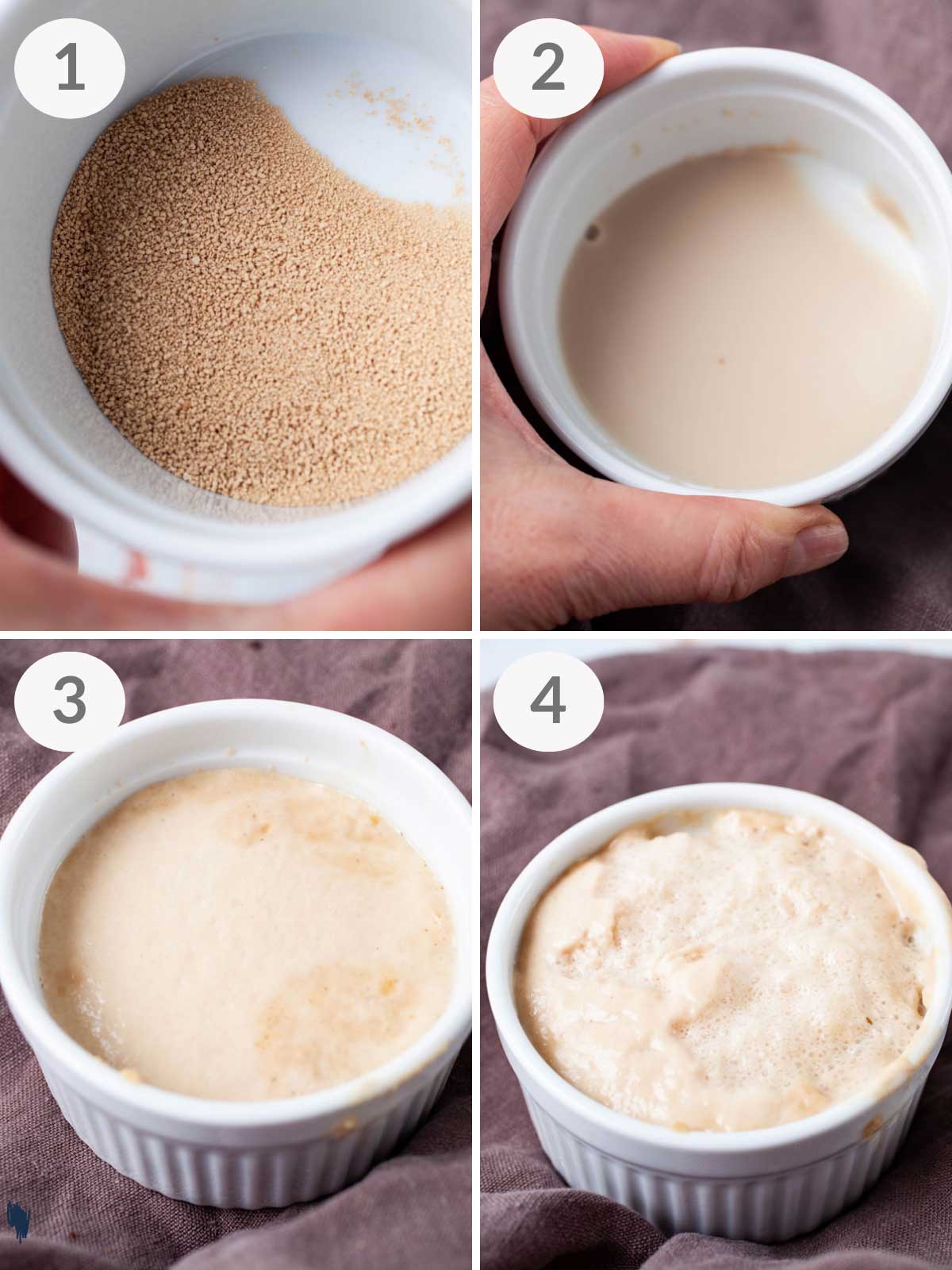
- Step One — Place the active dry yeast in a small bowl.
- Step Two — Add half a teaspoon of sugar and stir in ¼ cup of lukewarm water. The water should be between 110°F and 115°F (warm to the wrist but not hot). Too cold and the yeast stays inactive; too hot and it dies.
- Step Three — Cover the bowl with a clean kitchen towel to keep it warm and let it rest for 5 to 10 minutes.
- Step Four — The yeast will bloom, bubble, and almost double in size. If nothing happens after 10 minutes, the yeast is dead, or the water temperature was off — start again with a fresh packet.
Note: Always check the expiration date of your active dry yeast packets—they expire fast. I also usually buy a pack of three, so if one does not bloom, I always have a backup on hand.
How to Make Sicilian Pizza
This recipe comes together in three stages: making and rising the dough, pre-baking the crust, and assembling and baking the finished pizza. Read through all the steps before you start so the timing feels clear.
Make the Dough
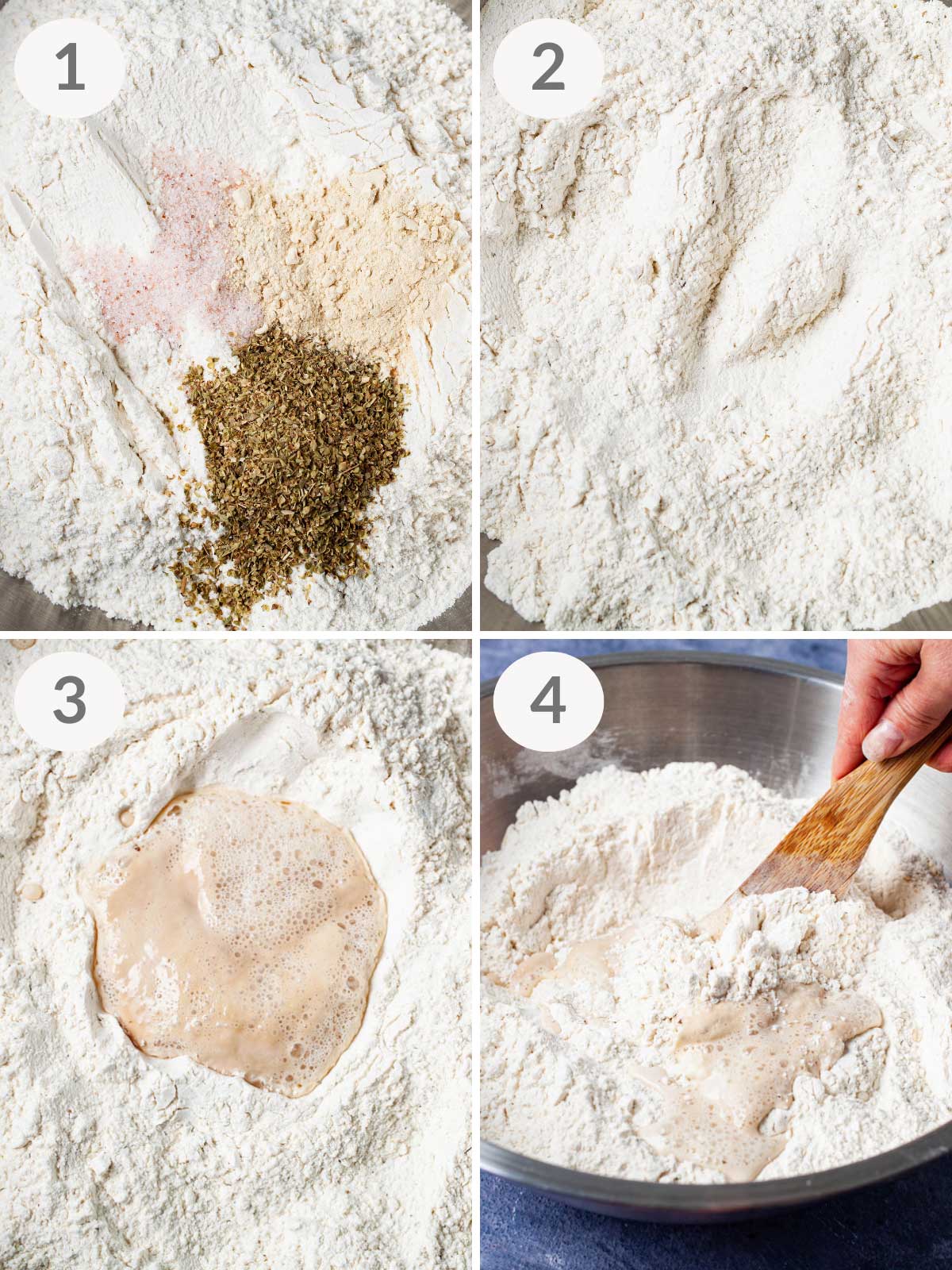
Step One — In a large mixing bowl, add flour, salt, dried oregano, garlic powder, and onion powder.
Step Two — Whisk together until well combined and the flour is slightly fluffed up.
Step Three — Add the bloomed yeast.
Step Four — Stir in the bloomed yeast mixture and combine gently.
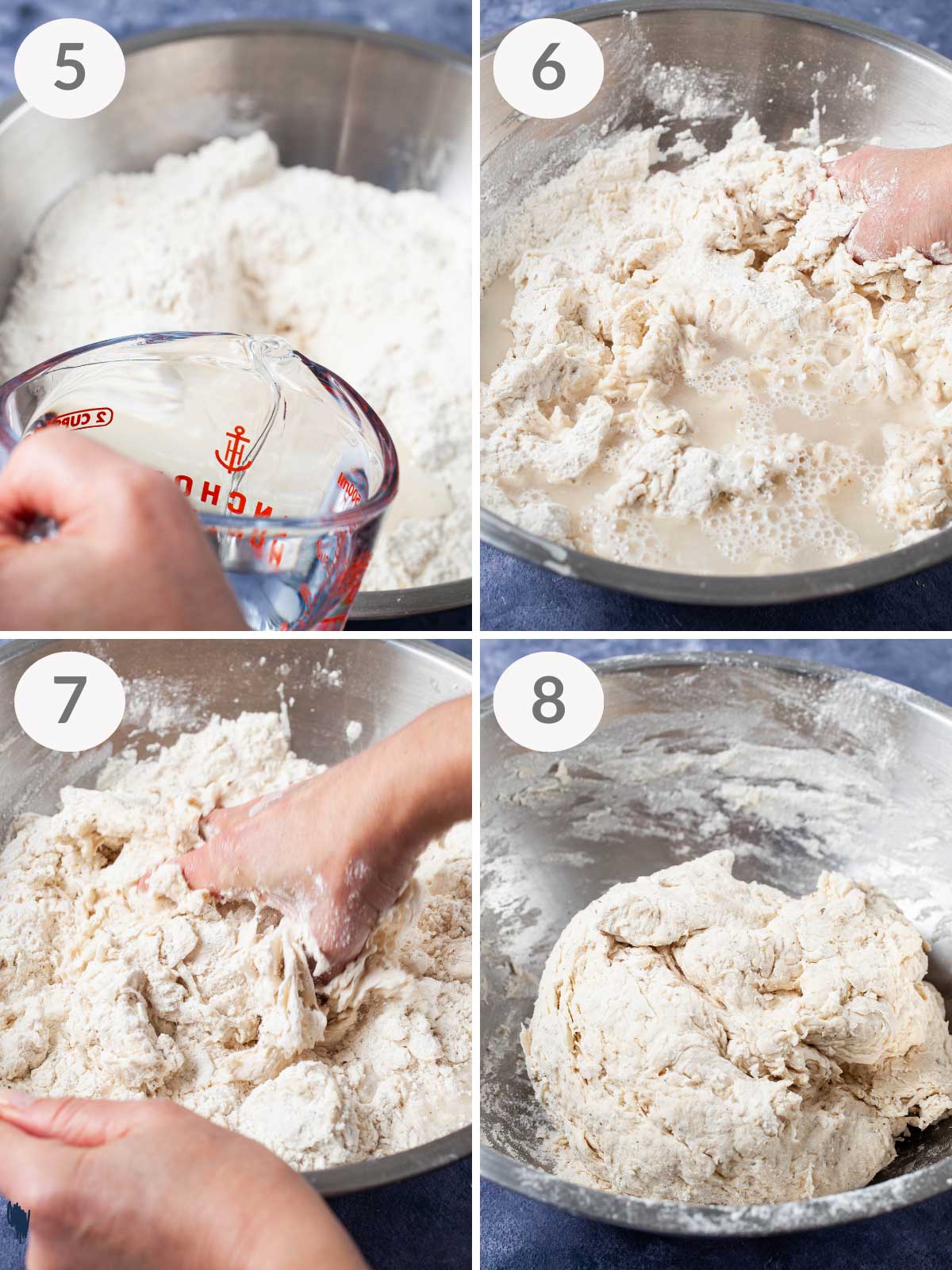
Step Five — Gradually add water to the flour mixture.
Step Six — Mix water and flour with your hands as you go.
Step Seven — Keep combining the water with the flour until the mixture starts to hold together. This happens quickly. At first, the dough will be shaggy and lumpy. That's normal.
Step Eight — Keep working the dough until the flour absorbs all the water and a rough ball forms. At this point, work in one tablespoon of olive oil to smooth and enrich the dough.
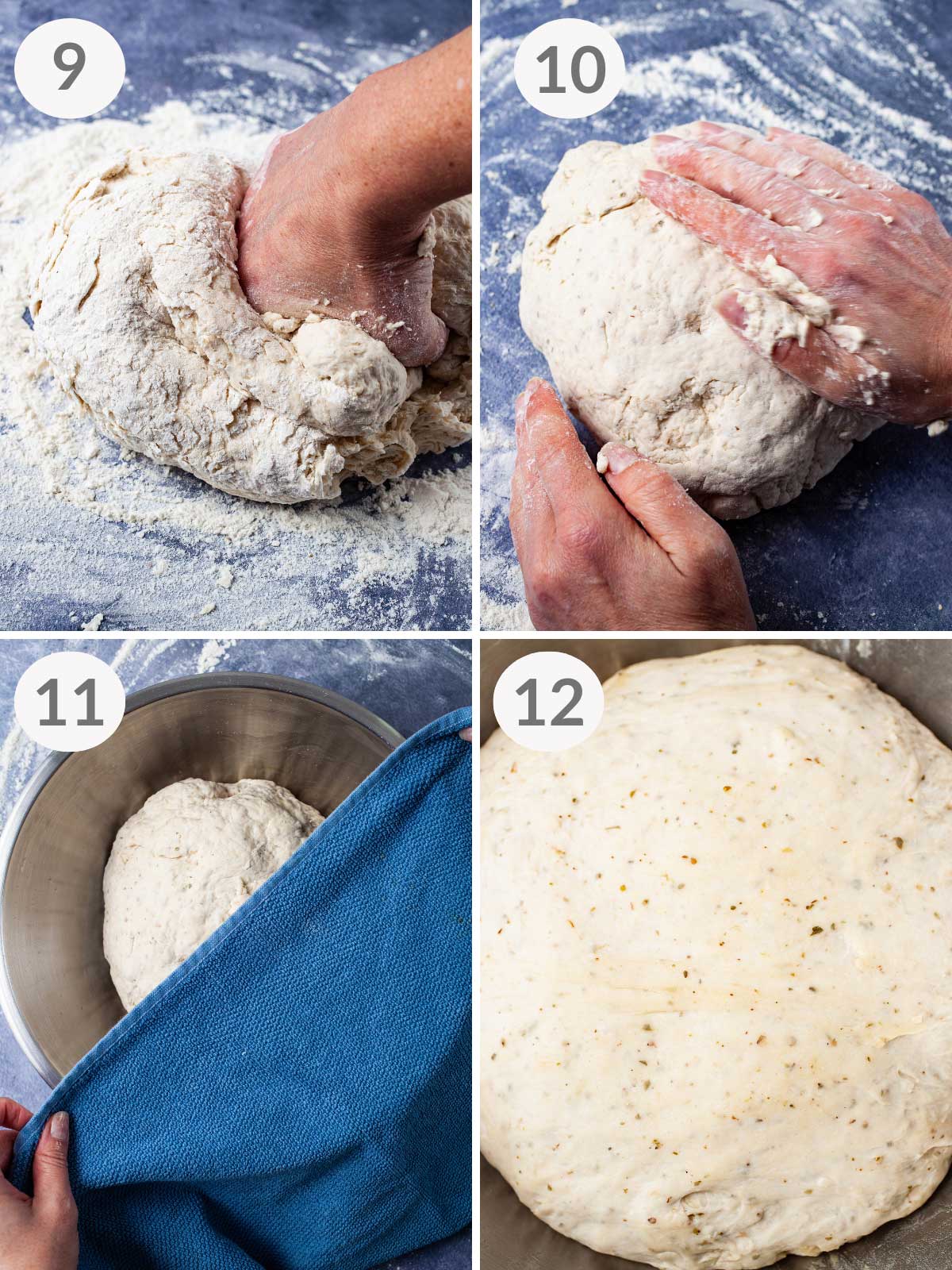
Step Nine — Remove the dough from the large bowl and place it on a lightly floured surface.
Step Ten — Knead for about 2 minutes until the dough is smooth and elastic. If it feels sticky, sprinkle a little more flour onto the surface and knead it in gently.
Step Eleven — Place the dough in a lightly oiled large bowl, cover with a clean kitchen towel.
Step Twelve — Let it rise for 90 minutes at room temperature or until the dough has almost doubled in size (first rise).
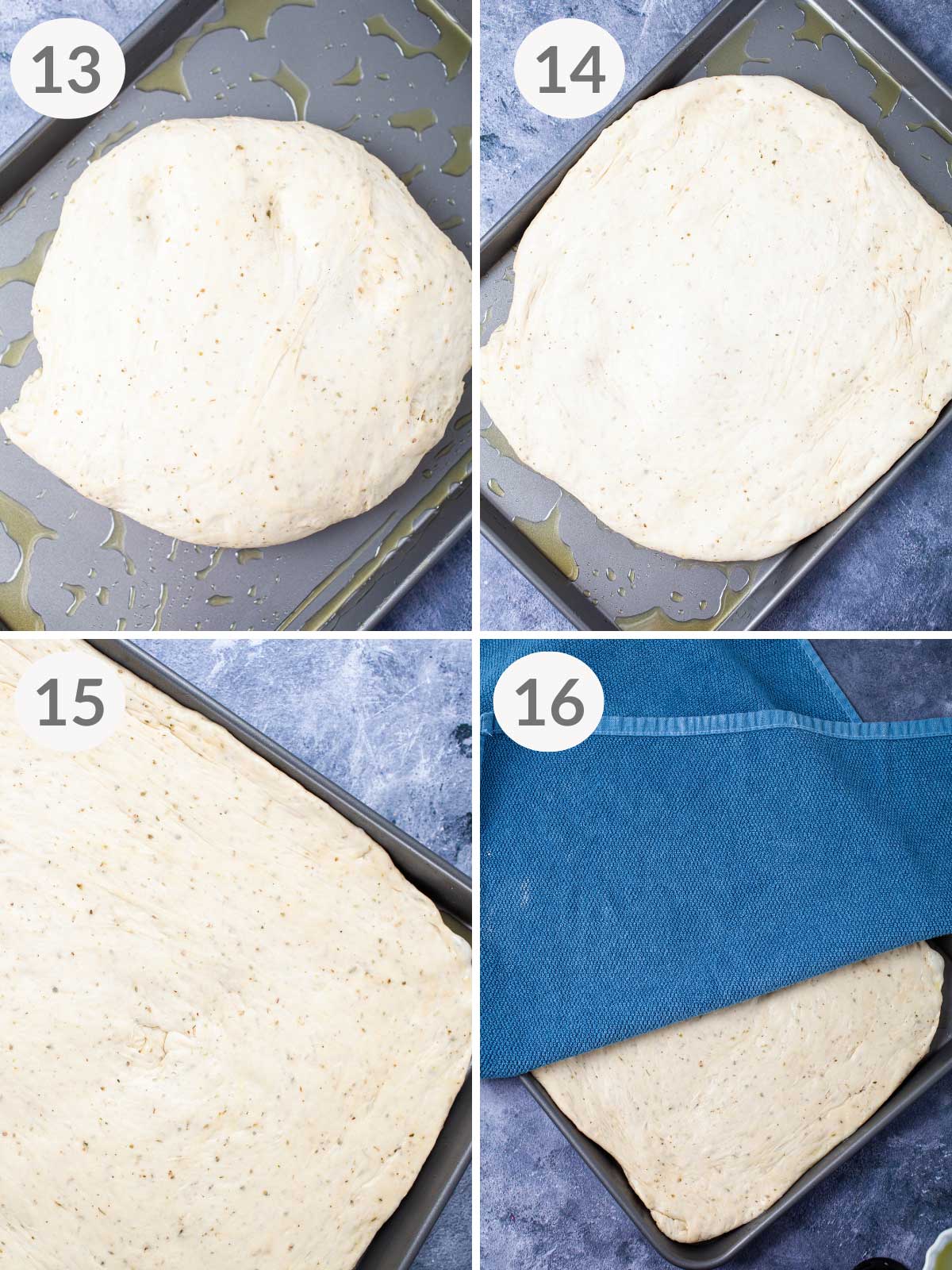
Step Thirteen — Once risen, coat the baking sheet with 2 tablespoons of olive oil. Place the dough in the center of the baking sheet.
Step Fourteen — Gently stretch and push it outward into a large oval, then into a rectangle that covers almost the whole length of the sheet. If the dough springs back, let it rest for 5 minutes and try again.
Step Fifteen — Continue gently stretching until the elastic dough covers almost the entire length of the baking sheet and no longer resists.
Step Sixteen — Cover with a kitchen towel and let it rise for another 30 minutes. If you have the time, a 90-minute second rise gives an even lighter, airier crust.
Pre-Bake the Crust, Make the Sauce, and Assemble
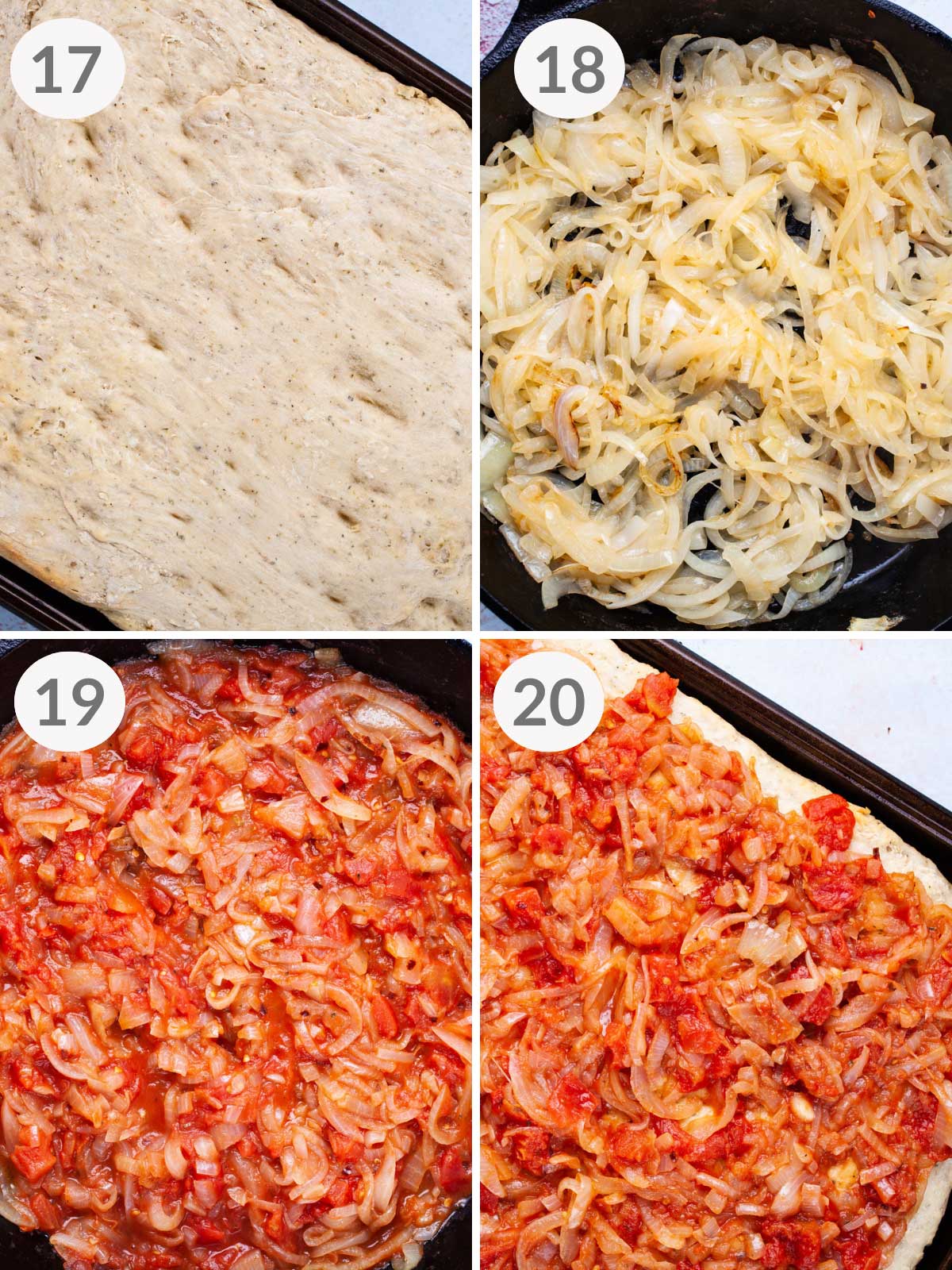
Step Seventeen — During the last 15 minutes of the second rise, preheat the oven to 450°F (230°C). Bake the dough on the lowest oven rack for 10 to 12 minutes, until the top is firm and pale with a few light golden spots. Remove from the oven.
Step Eighteen — While the crust pre-bakes, make the sauce. Heat 3 tablespoons of olive oil in a wide skillet over medium-high heat. Add the thinly sliced onions and cook, stirring frequently, for 10 to 12 minutes until soft and golden brown.
Step Nineteen — Stir in the crushed tomatoes. Season with salt, half a teaspoon of dried oregano, and half a teaspoon of crushed red pepper. Cook for 4 to 5 minutes, crushing any large pieces of tomato with a wooden spoon. Remove from the heat and let cool slightly before using.
Step Twenty — Spread the onion and tomato sauce evenly over the pre-baked crust, draining off any excess liquid (if you have any). Brush the edges and corners of the crust with a little olive oil.
Note: alternatively, you can brush the whole crust with a little olive oil before adding the toppings for extra flavor.
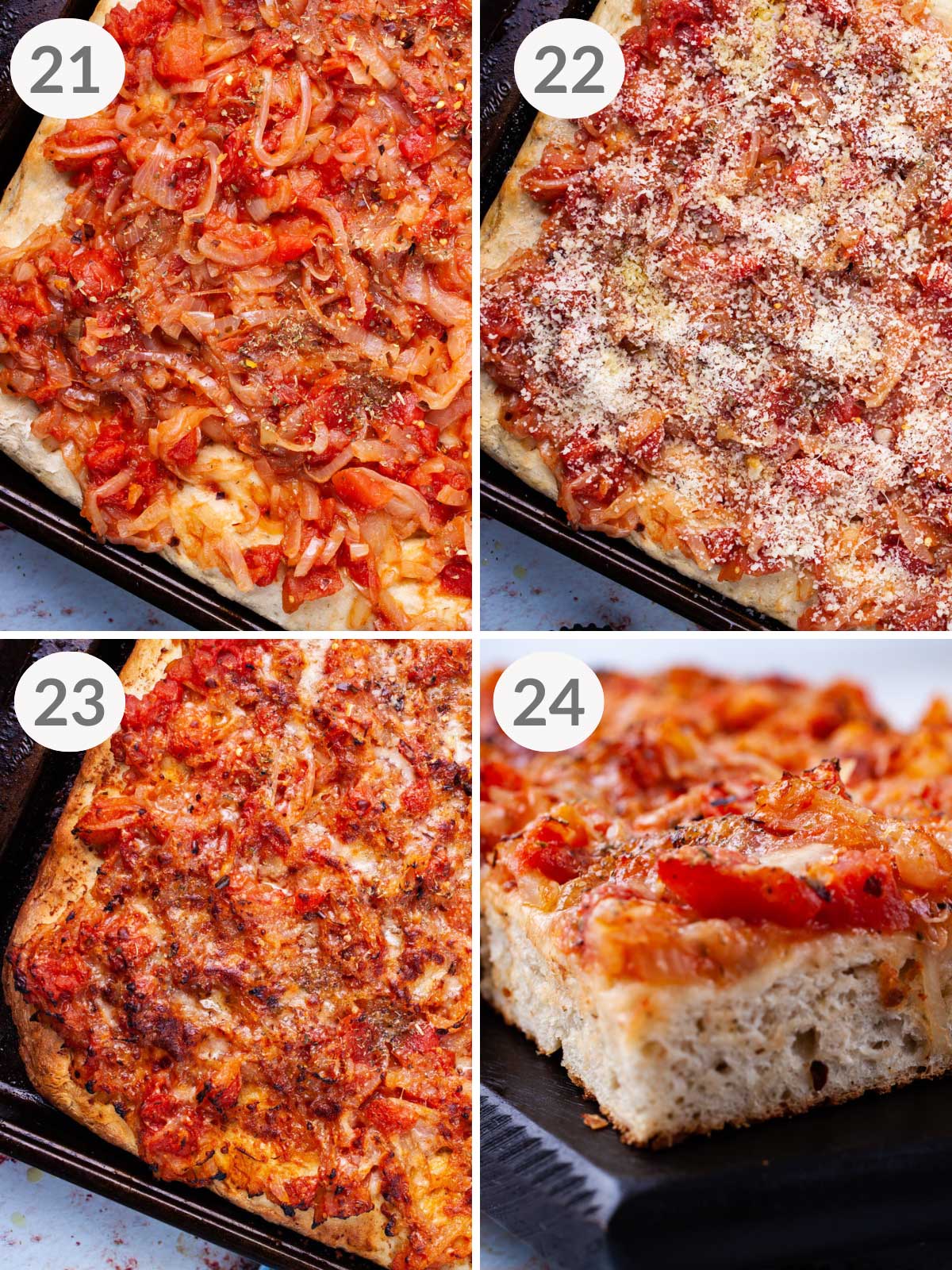
Step Twenty-One — Sprinkle the remaining oregano and crushed red pepper over the sauce. Add more red pepper if you like it spicy.
Step Twenty-Two — Scatter the grated Parmesan evenly over the top and finish with a drizzle of 1 teaspoon of olive oil.
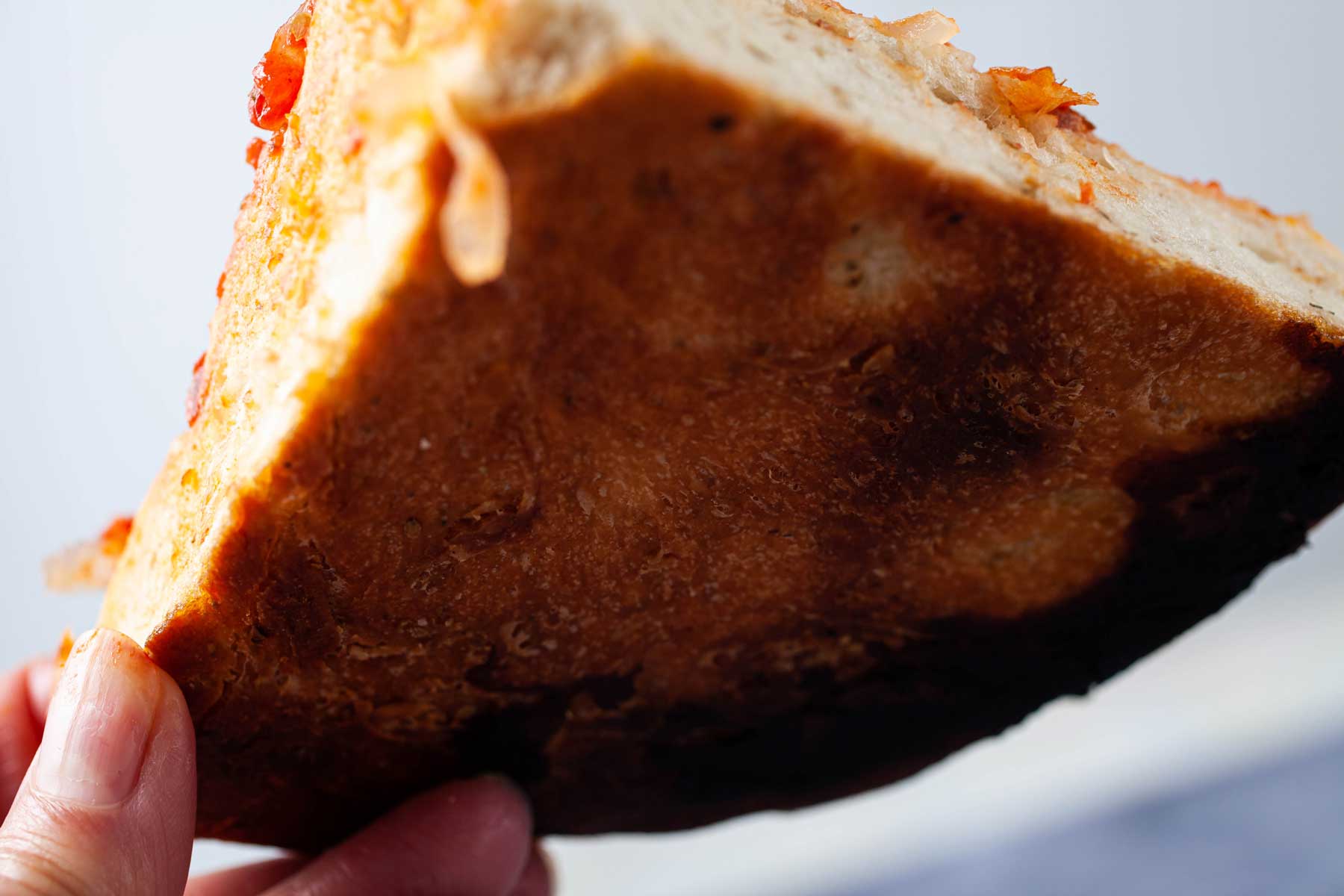
Step Twenty-Three — Return the pizza to the lowest oven rack and bake for another 15 minutes, until the crust is firm and crisp at the bottom, golden at the edges, and the onions have a few charred bits on top.
Step Twenty-Four — Remove from the oven and let it rest for a few minutes before cutting into squares and serving.
Top Tips
- Let the dough rise properly: A full 90-minute first rise at room temperature is important for developing the gluten strands that give the crust its structure and airiness. Don't rush it.
- Always oil the pan generously: Two tablespoons of olive oil on the baking sheet is what gives Sicilian pizza its signature crispy bottom. Don't skimp here.
- Bake on the lowest oven rack: This is where the crust gets the most direct heat from the base of the oven, which crisps the bottom beautifully without burning the top.
- Let the sauce cool before spreading: A hot sauce on a pre-baked crust can make the bottom soggy. Give it a few minutes to cool in the pan first.
- Don't overload the toppings: Too many toppings weigh the crust down and prevent it from crisping up properly. The onion and tomato sauce is enough — add extras sparingly.
- Optional air pockets: Just before the second rise is done, press your knuckles gently into the dough to create extra air pockets for a lighter, more focaccia-like crumb.
Extra Toppings
The base recipe is traditionally meatless, but here are a few additions worth considering:
- Fresh mozzarella: Added during the last 15 minutes of baking for creamy, melty pockets throughout.
- Anchovies: Scatter a few fillets over the sauce before the final bake for a salty, savory depth. Any leftovers work beautifully in my parsley and anchovy mini frittatas.
- Extra cheese: Grated Pecorino or Caciocavallo in place of or alongside the Parmesan for a more intensely flavored, southern Italian finish.
Serving Suggestions
- A protein-rich, Healthy Homemade Chicken Salad alongside a couple of slices makes a complete, satisfying meal.
- A crisp Kale Salad with Creamy Avocado Pesto, Healthy Cucumber Salad, or Mango Avocado Salad all pair beautifully.
- On colder days, serve with a bowl of Nourishing Stracciatella Soup or Butternut Squash Zucchini Soup.
- For movie night, make it part of an Italian grazing board with a platter of raw vegetables: sliced red bell peppers, fresh fennel, cucumbers, Romaine lettuce leaves, olives, and fresh figs all work wonderfully alongside.
Storage
Store leftover slices stacked between sheets of parchment paper in an airtight container in the fridge for up to 5 days. Reheat in a 350°F oven on a lightly oiled baking sheet until hot. Time varies depending on the crispiness you want. Try the microwave for a quicker option (the crust will be softer).
To freeze, wrap slices or the whole pizza in waxed or unbleached butcher paper, transfer to a freezer bag or airtight container, and freeze for up to 2 months. Reheat directly from frozen in a 450°F oven for 12 to 15 minutes.
Recipe FAQs
Pre-baking gives the thick crust time to firm up and crisp at the bottom before the wet sauce goes on. Without this step, the sauce soaks into the unbaked dough, and you end up with a soggy, undercooked center. It's a key step — don't skip it.
Yes. After the first rise, punch the dough down, wrap it tightly, and refrigerate for up to 24 hours. Take it out an hour before you plan to use it and let it come back to room temperature before shaping.
Yes. Use 2.5 to 3 times the amount of active dry yeast — so if the recipe calls for 7 grams of active dry yeast, use 17.5 to 21 grams of fresh yeast. Make sure it smells pleasant, crumbles easily, and always proof it first before adding it to the flour.
Bread flour gives a slightly chewier, more structured crust because of its higher protein content. All-purpose flour produces a softer result. Both work well — use what you have.
More Italian Recipes To Try Next
Made this? Tell me how it went in the comments and leave a star rating below. I love to hear from you. And don't forget to subscribe to my monthly newsletter! — Mariska
📖 Recipe
Homemade Thick Crust Sicilian Pizza (Sheet Pan Recipe)
Mariska RamondinoEquipment
- 11- x 17-inch rimmed baking sheet About that size
Ingredients
Authentic Sicilian-Style Pizza Dough
- 1 package active dry yeast, rehydrated according to package instructions (see notes) 7 to 9 grams
- ½ teaspoon sugar to feed the yeast
- 3 teaspoons fine salt 17 grams
- 2 tablespoons dried oregano 6 grams
- 2 teaspoons garlic powder 6.5 grams
- 2 teaspoons onion powder 4.6 grams
- 7 ½ cups unbleached bread or all-purpose flour 1 kilo/35.5 ounces plus more to sprinkle the work surface
- 2 ¼ cups water at room temperature, or as required 560 ml
- 4 tablespoons olive oil divided
Pizza sauce & toppings
- 4 tablespoons olive oil divided, plus 1 teaspoon
- 2 large yellow onions thinly sliced about 24 ounces/675 grams
- 1 jar diced or crushed tomatoes 18.3 ounces/520 grams
- 2 ½ teaspoons fine salt
- 1 teaspoon dried oregano
- 1 teaspoon crushed red pepper or more as desired
- ½ cup fine grated Parmesan cheese (optional) 45 grams
Instructions
Make Pizza Dough
- Whisk together salt, dried oregano, garlic powder, onion powder, and flour in a large bowl.3 teaspoons fine salt, 2 tablespoons dried oregano, 2 teaspoons garlic powder, 2 teaspoons onion powder, 7 ½ cups unbleached bread or all-purpose flour
- Then stir in the rehydrated yeast.1 package active dry yeast, rehydrated according to package instructions (see notes), ½ teaspoon sugar to feed the yeast
- Gradually add water. Mix the flour and water by hand until the dough comes together.2 ¼ cups water at room temperature, or as required
- At first, you only get chunks of flour, which is normal. But the flour eventually absorbs all the water, and as you keep kneading, you will form a rough ball (this happens quickly).
- At this point, add one tablespoon of olive oil as you form the dough into a smoother ball. It will give flavor and soften the crust.
- Remove the ball of dough from the bowl and place it on a well-floured flat surface.
- Continue kneading it for about 2 minutes or until the dough becomes smooth and elastic. (During the kneading process, sprinkle the work surface with more flour if the dough feels too sticky, and gently knead it in).
- Place dough in a lightly oiled bowl and cover with a clean kitchen towel. Let it rise for about 90 minutes at room temperature.
- After the initial rising time, take out the baking sheet and coat it with two tablespoons of olive oil (it adds extra flavor to the bottom of the pizza).
- Place the risen dough in the center of the sheet. Gently stretch and push it first into a large oval.
- Then continue to shape it into a rectangular form, evenly covering almost the whole length of the baking sheet, and the dough stops resisting.
- Cover with a clean kitchen towel and let it rise for another 30 minutes at room temperature. If the dough has stretched back a little, gently reshape it into its final form.
- Optional: gently make small dents into the risen dough with the knuckles of your fist to create extra air pockets.
- Note: if you have the time, a 90 minutes second rise instead of 30 will give you an even lighter crust.
- Continue to pre-bake the pizza crust.
Prebake the pizza dough
- During the last 15 minutes of the pizza dough's rising time, preheat the oven to 450°F/230°C.
- Bake the pizza dough on the lowest oven rack for 10 to 12 minutes. It should look mostly pale but firm, with a few light golden brown spots. Remove the crust from the oven.
Make the pizza sauce and toppings
- While the pizza crust is pre-baking in the oven, make the pizza sauce and toppings.
- Cover the bottom of a wide skillet, large enough to hold the onions, liberally with 3 tablespoons olive oil, and heat over medium-high heat.
- Add the onions and cook, frequently stirring, for about 10 to 12 minutes, or until soft and browned.2 large yellow onions thinly sliced
- Stir in the tomatoes—season with salt and ½ teaspoon of dried oregano, and ½ teaspoon of crushed red pepper. Cook and stir for 4 to 5 minutes. Crush the tomatoes with a wooden spoon while stirring.
- Remove the pan from heat. Let it slightly cool and reserve.
Make the Sicilian-style pizza (assemble and bake)
- Distribute the reserved onions and tomatoes on top of the pre-baked pizza crust.
- Sift out any watery liquid—you should have none or very little.
- Top off with ½ teaspoon dried oregano and ½ teaspoon crushed red peppers.
- Brush some olive oil over the corners and sides of the pizza crust.
- Sprinkle the parmesan cheese evenly over the pizza sauce and top it off with 1 teaspoon of olive oil.½ cup fine grated Parmesan cheese (optional)
- Place the pizza back in the oven on the lowest oven rack for another 15 minutes or until the crust is firm at the bottom, crisp at the edges, and the top has bits of charred onions.
- Take it out of the oven and let it sit for a few minutes before serving.
- Cut into squares and serve.
Notes
- Nutrition information is for Authentic Sicilian Dough with Toppings.
- Good quality crushed or diced tomatoes: I love the Jovial brand — pure sweet tomatoes straight from the jar with no additions. You can also use leftovers of my homemade tomato sauce instead.
- Let the dough rise properly: For a thick and airy crust, it's important to let it rise properly and at room temperature to develop the gluten strands that give it its structure.
- Always sufficiently oil the pizza pan to achieve that classic Sicilian-style crispy crust.
- Baking the pizza: Bake this thick pizza close to the oven floor, where the crust will get the most radiant heat from the base. It will help crisp up the bottom and create a beautiful crunchy golden-brown pizza crust.
- Let the pizza sauce slightly cool before topping it on your thick-crust pizza dough.
- Other toppings: Traditionally this is a meatless sauce. Anchovies are not part of the original, though if you love them, scatter a few fillets over the sauce before the final bake. For a New York-style finish, add fresh mozzarella during the last 15 minutes or finish with grated Parmesan or Pecorino.
- How to rehydrate active dry yeast: see step-by-step instructions with pictures in this post, or use the same process as this Fig Cake. Here are the instructions:
- Use 7 to 9 grams of active dry yeast and place the contents of the package in a small bowl.
- Add a bit of sugar—about ½ teaspoon. It feeds the yeast and helps you determine if it is still active. A pinch of sugar will make the yeast bubble, proving it hasn't expired.
- Stir in ¼ cup lukewarm water! You need warm water between about 110°F-115°F. It will stay inactive if too cold, and the yeast will die if too hot.
- You can use an instant-read thermometer. I usually test the warmth of the water with my wrist. It should feel very warm but not hot.
- Then let it rest for about 5 to 10 minutes (best to cover it with a clean kitchen towel). If active, the yeast should dissolve in the water and bubble. If not, the yeast is dead, or your water is too hot or cold.
Add your own private notes
Whenever you come back to this recipe, you’ll be able to see your notes.
Nutrition (% Daily value)
Disclaimer: This nutritional data is calculated using third party tools and is only intended as a reference.
Brendan Talbert says
I do have access to fresh yeast. What is the measurement for fresh?
Mariska Ramondino says
Hi Brendan. Thank you for stopping by. It has been a while, but I believe you should use 2.5 to 3 times the amount of active dry yeast. So, if the recipe calls for 7 grams active dry yeast, use anywhere from 17.5 to 21 grams fresh yeast. Make sure your fresh yeast smells pleasant and crumbles easily and always proof it first before adding it to the flour. It's always best to test if your yeast is still active before doing all the work and you'll get a better rise too. Good luck and let me know how it goes.