
Cold brew coffee is a smooth, low-acid concentrate made by steeping coarsely ground coffee beans in cold or room-temperature water for 12 to 24 hours, then straining. No heat, no special equipment, and you can make a big batch in advance with the coffee beans you already love.
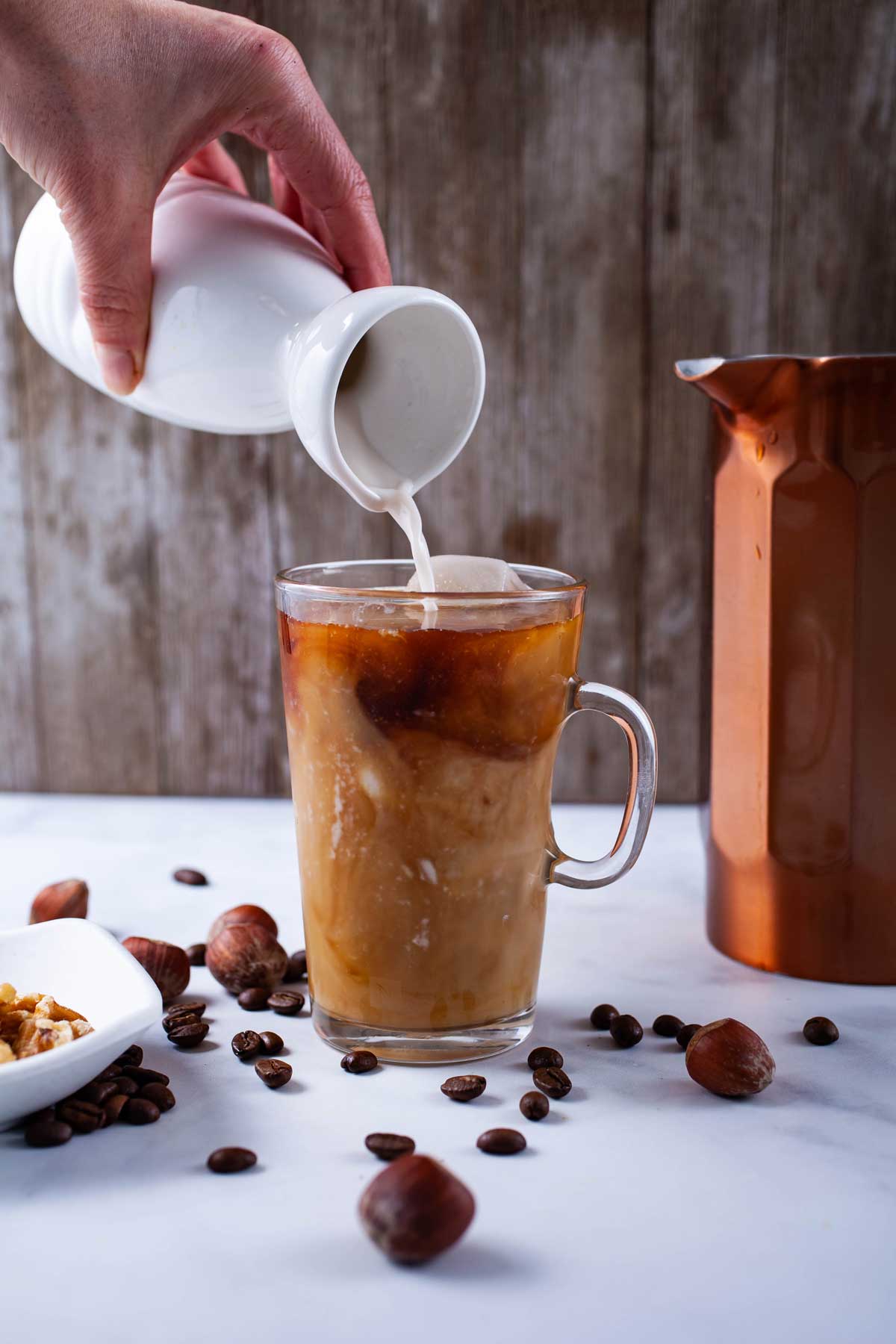
I am very much into cold coffee when the temperature rises. This cold brew coffee recipe is one of my favorite ways to make it at home, and once you start, you won't go back to paying coffee shop prices.
Enjoy a rich, smooth cup for breakfast alongside some fluffy oat pancakes or use it as the base for a healthy coffee smoothie, coffee chia pudding, or a naturally flavored cold brew latte. Let's make a big batch together so you're set for the week!
Jump to:
- Why You'll Love This Recipe
- What Is a Cold Brew & Is It The Same As Iced Coffee?
- What Kind of Roast
- The Grind
- If You Don't Have a Coffee Grinder
- The Cold Brew Coffee To Water Ratio
- Ingredients
- How To Make Cold Brew Concentrate
- Recommended Steeping Time
- How To Strain The Coffee
- Storage
- Alternative Flavors
- Recipe FAQs
- More Coffee Recipes You Might Like
- 📖 Recipe
Why You'll Love This Recipe
- Rich, nuanced flavor: Cold brewing pulls out the bright, sweet notes from the beans and leaves behind a lot of the bitterness you get from hot-brewed coffee.
- Lower acidity: The cold steep process produces a noticeably smoother cup - great if hot coffee is hard on your stomach.
- Make-ahead friendly: One batch lasts up to a week in the fridge. Morning coffee is ready before you even think about it.
- No special equipment needed: A large jar or pitcher, a nut milk bag or fine-mesh sieve, and you're set.
- Budget-friendly: A week's worth of cold brew at home costs a fraction of daily coffee shop runs.
What Is a Cold Brew & Is It The Same As Iced Coffee?
Cold brew and iced coffee are both cold coffee drinks, but the brewing process and flavor profile are very different.
Cold brew coffee is made with room-temperature (or cold) water poured over coarse coffee grounds, steeped for 12 to 24 hours for a more robust flavor, and then strained. Depending on the coffee-to-water ratio, you can make it quite concentrated and dilute it to taste with water or your favorite milk.
Iced coffee is more of a flash-chilled method - a regular hot-brewed coffee (made a bit stronger than usual) poured over (flavored) ice. It's excellent if you enjoy the bolder, more bitter compounds that come with a traditional cup.
Today, we're making a cold brew recipe! Let's go over some basics and give you a great starting point!
What Kind of Roast
Choosing a coffee brand and type of roast is very personal, and depending on your location, the available varieties may differ. I suggest starting with a roast you already love. That said, here's what I've learned from testing:
- Normally, I prefer a light roast for a hot cup, but I find it too weak for cold brew - the coffee flavor was almost absent.
- A medium to dark roast works much better and gives the brew body and depth.
- You can also blend a medium and dark roast together for flavors that complement each other.
- If you love the fruity notes of a lighter blend, go for a more concentrated 1:3 coffee-to-water ratio and brew it longer for the best results.
Tip: If in doubt, use a larger quantity of coffee to start. You can always dilute after straining. There isn't much you can do when the concentrate is too light after steeping for so many hours.
The Grind
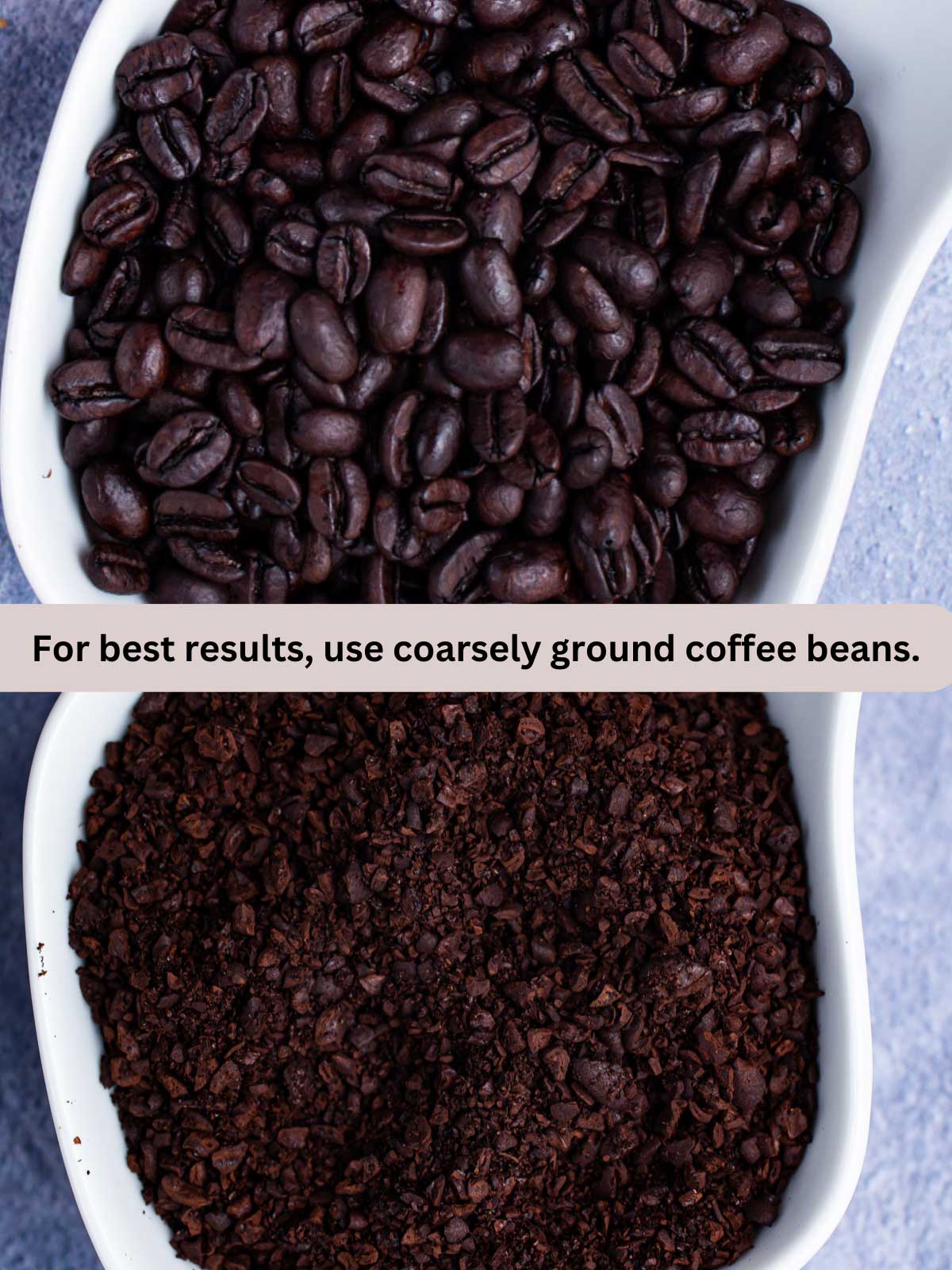
I took the advice of some local coffee aficionados and coarsely grind my beans for the best cold brew concentrate. The less-dense grounds let water flow more easily than a fine grind, extracting all those aromatic, sweeter flavors from the beans without the bitterness.
Tip: Buy whole beans and grind them fresh when you need a batch. It produces the best flavor regardless of how you make your coffee, and whole beans store better than pre-ground. Use a coffee grinder set to the coarse setting.
If You Don't Have a Coffee Grinder
- Use a blender or Vitamix: Grind in quick, short bursts of 3 to 5 seconds on medium-high speed. Do this for about 30 seconds total - roughly 6 bursts. This produces a nice coarse grind.
- Most grocery stores now have large grinder machines in-store. Choose the coarsest setting or the French Press option.
- If you buy coffee at your local coffee shop, you can ask the barista to grind your beans on a cold brew or French Press setting.
The Cold Brew Coffee To Water Ratio
When you ask regular cold coffee brewers or search online, you'll find that not everyone agrees on the exact ratio. Some suggest 1:3, 1:4, or even 1:5 coffee-to-water, and some even recommend carefully weighing the coffee in grams or ounces. The ideal ratio is very personal.
I keep it simple: 1 cup (80 grams) of whole coffee beans, coarsely ground, for every 4 cups (946 ml) of water. That's a 1:4 ratio. It produces a balanced, pleasant concentrate that works well as-is over ice or with a splash of milk.
Note: Ground coffee takes up almost the exact same volume as whole beans, so the weight ratio is essentially one-to-one. If you have a scale, measure 80 grams for every 4 cups of water.
Ingredients
Here is what you need to make this cold brew coffee concentrate recipe:
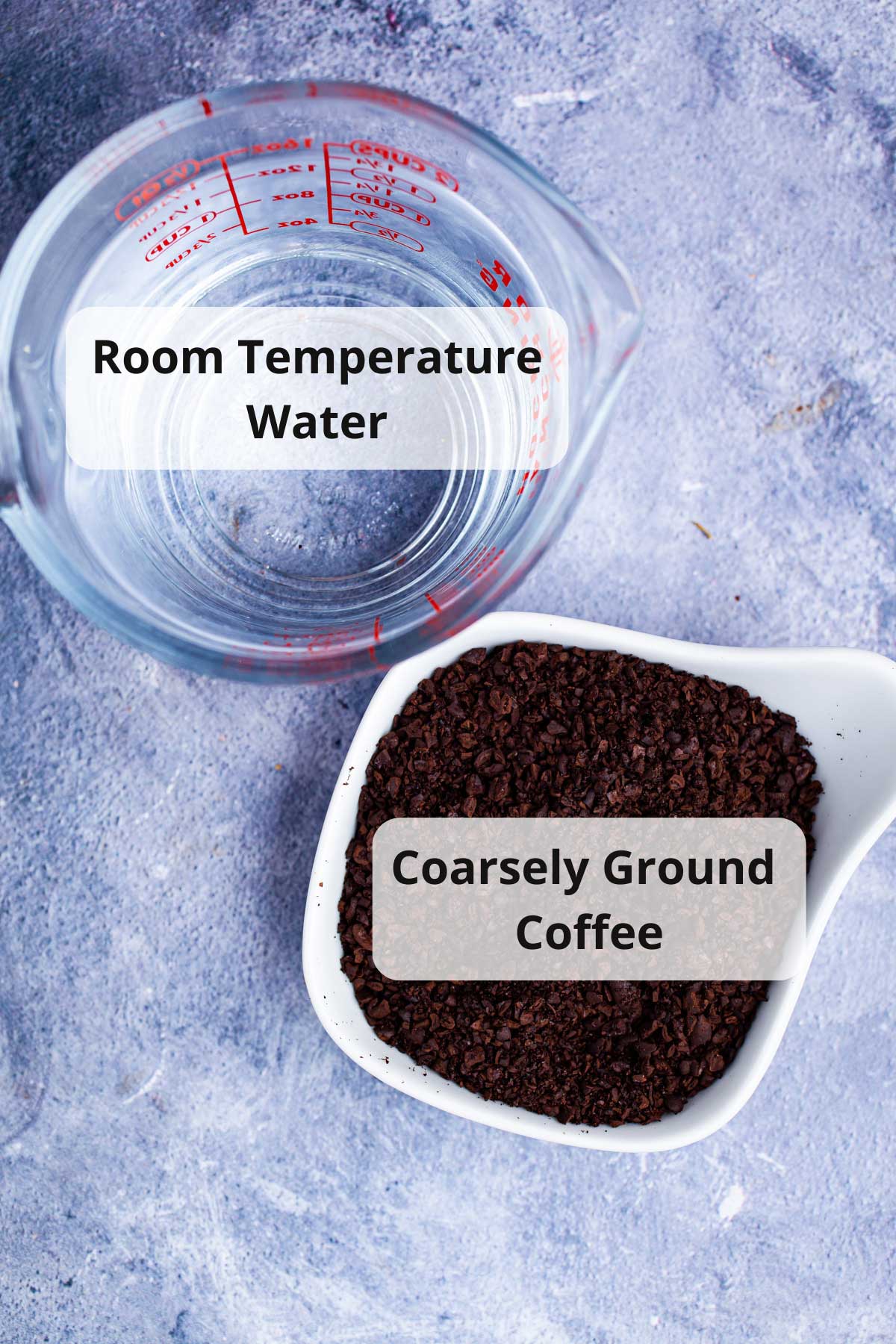
- Whole coffee beans: Use 1 cup (80 grams), freshly and coarsely ground. Medium to dark roast works best. If using a lighter roast, go for a more concentrated 1:3 ratio and brew closer to 24 hours.
- Water: 4 cups (946 ml) of filtered water, if possible. Room temperature water is best.
How To Make Cold Brew Concentrate
The process really is as simple as: combine, cover, steep, and strain.
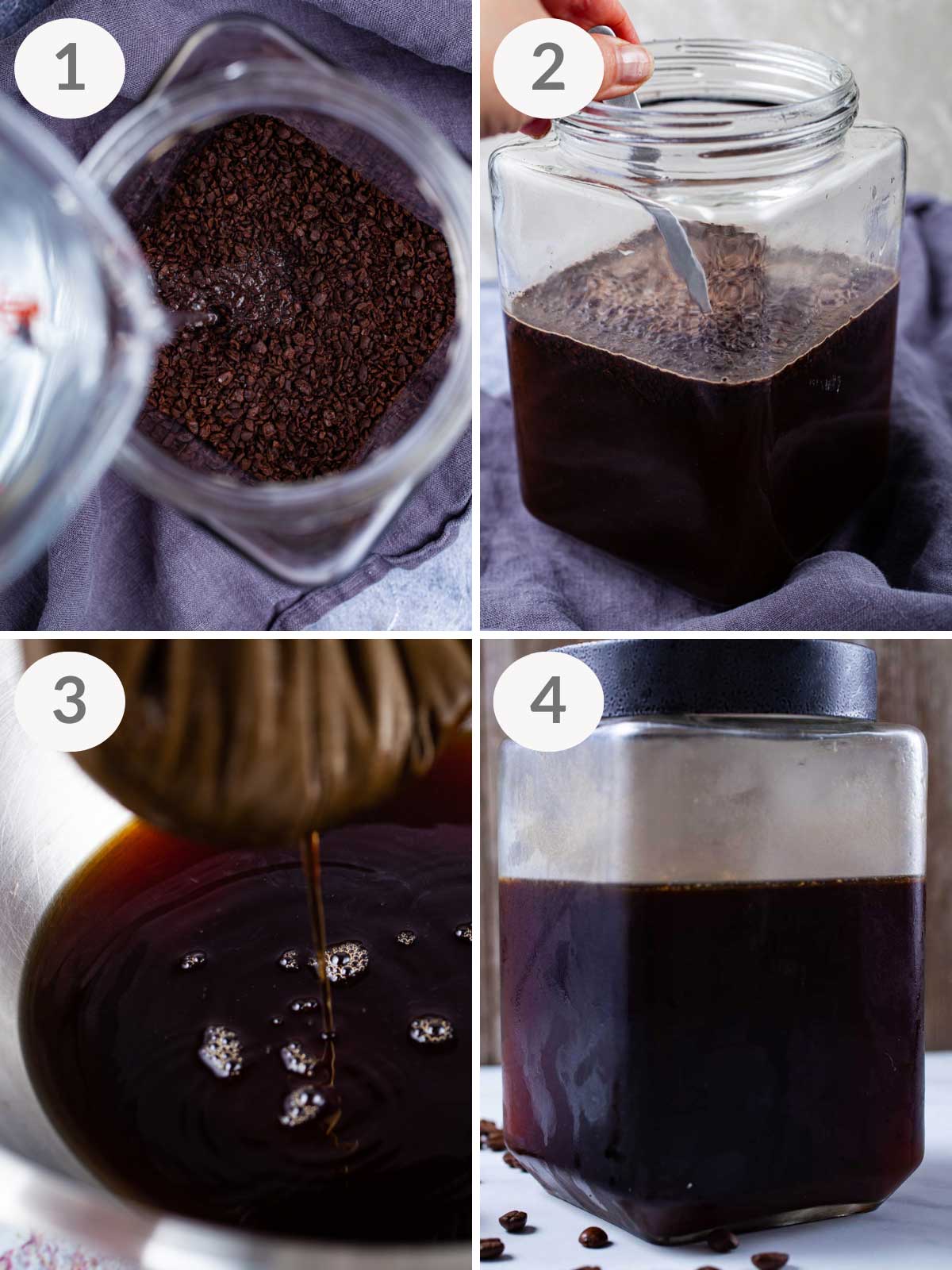
- Step One - Place your coarsely ground coffee beans in a large pitcher, mason jar, or French press with a lid. Make sure the vessel is large enough to hold both the grounds and all the water comfortably. Pour in the recommended amount of water.
- Step Two - Stir for a minute or two until well combined and all the coffee is thoroughly wetted. Cover and leave to steep at room temperature for 18 hours. Room temperature gives a slightly stronger flavor than steeping in the fridge.
- Step Three - When the steep time is up, strain the coffee. Place a nut milk bag over a large deep bowl, pour the concentrate through, close the bag, and squeeze gently until all the liquid has dripped through.
- Step Four - Transfer the strained cold brew into a clean pitcher with a lid. It's ready to serve immediately over ice or refrigerate for up to one week.
Recommended Steeping Time
Steeping time, like the roast and the ratio, comes down to personal preference and the strength of your beans. Anywhere from 12 to 24 hours works, but 18 hours is my sweet spot.
You've got to test this out a bit for yourself. I'd suggest checking in at 12 hours. If it tastes too light, let it go another 3 to 6 hours and taste again. Steeping at room temperature gives a slightly stronger result than the fridge, so keep that in mind when dialing in your timing.
How To Strain The Coffee
You don't need any fancy equipment, and there are different ways of doing this, so here are some options:
- A nut milk bag set over a large bowl. It's fast, easy to squeeze, and produces a clean concentrate.
- A fine-mesh sieve lined with a thin paper coffee filter or fine cheesecloth to filter the coffee.
- A reusable coffee filter if you already have one.
- A French press - steep the grounds inside it and press to strain.
Note: I like to save the used coffee grounds as a body scrub in the shower - a bit messy, but great for the skin. I also sometimes sprinkle them onto the garden soil and rake them in. They make an excellent fertilizer for my acid-loving plants.
Storage
After straining, transfer the cold brew into a covered pitcher or jar and store it in the fridge for up to one week. Serve over a glass full of ice, and add your favorite milk, cream, or sweetener as you like.

Alternative Flavors
There are so many ways to personalize your cold brew once the concentrate is ready:
- Use flavored coffee beans. A salted caramel variety is my favorite.
- Add a flavored creamy milk or milk substitute for a touch of natural sweetness. I love a splash of coconut cream or vanilla-flavored nut milk.
- Stir in ground spices during the steep: cinnamon, cardamom, pumpkin spice, allspice, cloves, gingerbread spice, or masala chai all work beautifully. Start with ⅛ teaspoon, taste, and work your way up.
- A few drops of sugar-free vanilla extract goes a long way.
- Sweeten with honey or maple syrup, alone or combined with cacao powder for a chocolatey coffee drink ( flavored collagen powder, my favorite).
- Drop in a couple of homemade Biscoff cookies to let their spices and sweetness seep into the brew.
- Use the concentrate to make a cold brew latte or stir some into bone broth cocoa for something different.
Pro tip: I prefer buying a brand that locally roasts organic coffee beans.

Recipe FAQs
Yes. Use the same 1:4 ratio, but feel free to experiment. A stronger 1:3 ratio at first is a good idea since decaf can be a little lighter in flavor. I love this Organic Buzz Free Decaf.
Absolutely. Make as much as you need. Just make sure you have a vessel large enough, or use multiple vessels at once. Great for entertaining guests who love coffee.
That's entirely up to you. I usually drink mine as-is over ice, or with a splash of milk or cream. If it's too strong, add water a little at a time to bring it up to your favorite level of coffee strength.
1 cup of whole beans equals 1 cup of ground coffee by volume. If you're using a scale, measure 80 grams of ground coffee for every 4 cups of water.
I prefer the natural sweetness and smoothness you get from coarsely ground beans, but if that's all you have, go ahead and experiment - you might even enjoy some of the bolder, more bitter notes that come through with a finer grind. Just keep a few things in mind. Start with a shorter steep of 8 to 12 hours, as a finer grind extracts faster and can turn bitter if left too long. Use a bit less coffee to start (about ¾ cup), since a fine grind packs more surface area - you can always adjust next time. A lighter roast helps balance the more intense extraction. And don't forget that with a finer grind, you'll need a paper coffee filter over a sieve, or a French press, to keep the grounds from slipping through.
More Coffee Recipes You Might Like


Made this? Tell me how it went in the comments and leave a star rating below. I love to hear from you. And don't forget to subscribe to my monthly newsletter! - Mariska
📖 Recipe

Cold Brew Coffee Recipe (How to Make It at Home + Tips)
Mariska RamondinoEquipment
- 1 Large pitcher, mason jar, or French press (at least 1.5 quarts) with lid
- 1 Large deep bowl (for straining)
- 1 Coffee grinder (coarse setting) or blender
- 1 Kitchen scale (optional) for measuring 80 grams of beans
Ingredients
- 1 cup whole coffee beans freshly and coarsely ground 80 grams
- 4 cups of water 946 ml
Instructions
- Place the coffee grounds in a one-quart pitcher or similar vessel. Make sure that you can cover it, even if it's with some plastic wrap. Make sure that all the water and the coffee grounds can fit, and you can store it in the fridge.1 cup whole coffee beans freshly and coarsely ground
- Pour the water over the coffee grounds. Stir to combine for a minute or until all the coffee grounds are thoroughly wetted.
- Cover and let it steep at room temperature for 12 to 24 hours. 18 hours is my sweet spot.
- When ready to strain the coffee, place a nut milk bag over a large deep bowl (see other filter options in note).
- Pour the coffee concentrate into the milk bag. Close the bag, and use your hands to let the coffee steep and drip out entirely into the bowl.
- Discard the coffee grinds or use them as a body exfoliator or fertilizer for acid-loving plants.
- Transfer the cold brew into a pitcher with a lid-you can also use the same vessel in which the coffee grounds have steeped, but rinse it out first.
- Refrigerate and store for up to one week.
- To serve: Fill a tall glass with ice and pour over the cold brew. If desired, leave enough room for milk or cream or dilute with water if too strong. Enjoy as-is, or add your favorite flavors or sweeteners.
Notes
Alternative options to strain your cold brew
Alternatively, if you don't have a nut milk bag, use a thin coffee filter or fine cheesecloth and place it into a sieve or fine-mesh strainer over a large deep bowl. Pour coffee concentrate through the prepared sieve into the bowl. For more options, see the post. Although not necessary, cold brew coffee is super easy to make with a cold brew coffee maker.Coffee To Water Ratio
My favorite ratio is 1:4 (coffee to water ratio). It's a great starting point. But feel free to adjust based on preference and make your cold brew more robust or weaker.Weighing The Coffee Beans
Know that 1 cup of whole coffee beans weighs the same as 1 cup of ground coffee beans.Coarsely Grinding The Coffee Beans
Grind the beans with a coffee grinder on the coarsest setting. Alternatively, you can use a blender and pulse on a medium to high setting for 3-5 seconds for about 30 seconds total. Or ask a locate roaster to grind your beans on a French Press setting. Most local grocery stores have a grinder with a French Press setting.Add your own private notes
Whenever you come back to this recipe, you'll be able to see your notes.
Nutrition (% Daily value)
Disclaimer: This nutritional data is calculated using third party tools and is only intended as a reference.


Leave a Reply